Now Playing

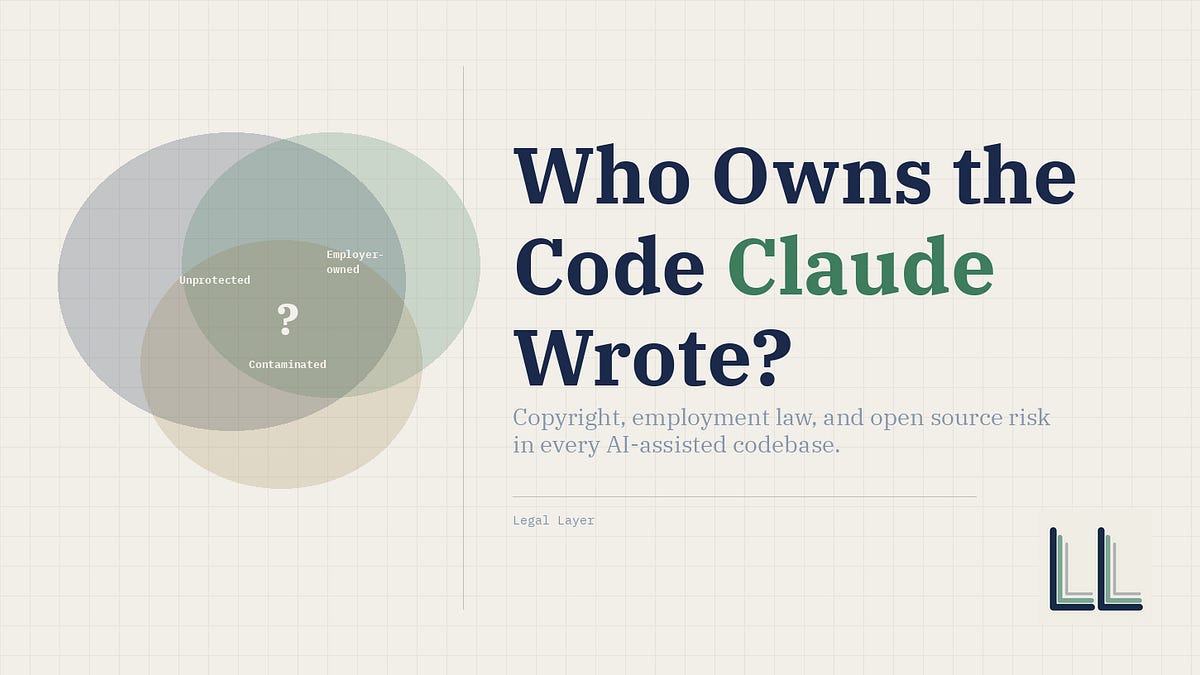
Who Owns the Code Claude Wrote?

Who Owns the Code Claude Wrote?

legallayer.substack.comSena Evren

14 min read → 2 min listen

0:000:00
Transcript

Speaker 1: Up next, we have a piece about the legal gray area of AI-generated code that really caught my attention. It basically breaks down who actually owns the software when you let an AI like Claude do the heavy lifting.

Speaker 2: Oh, that is interesting. I think a lot of developers just assume if they type the prompt, they own the output. Is that not the case?

Speaker 1: Not necessarily. The core issue is 'meaningful human authorship.' Current legal doctrine suggests that if an AI generates code and you just accept it verbatim without real creative input, it might not be copyrightable at all. It’s like hiring a ghostwriter who refuses to sign a contract; the work might just end up in the public domain.

Speaker 2: That makes sense, but how do you prove you were the one driving the bus? Is it just about writing a really long prompt?

Speaker 1: Not quite. It’s about architectural intent. You need to document your design decisions, your rejections of the AI's initial ideas, and your own structural changes. Think of it like a chef using a robot to chop vegetables; the robot does the labor, but the chef’s recipe and plating are what make it a unique dish.

Speaker 2: I see. So, documenting your process—like keeping your commit messages detailed and saving your design notes—is actually a legal safeguard now.

Speaker 1: Exactly. And there is a second, more immediate risk: your employer. If you use company-licensed AI tools, your employment contract might claim ownership of anything you build, even your personal side projects, because the AI is 'context-aware' of your work files.

Speaker 2: That sounds like a nightmare for side-hustlers. What about the risk of accidentally copying open-source code? I’ve heard that’s a big concern.

Speaker 1: It is. If the AI was trained on GPL-licensed code and it spits out a verbatim chunk of that, you could be violating a copyleft license without even knowing it. The best advice is to run a license scan on your codebase, just like you would run a security audit. It’s a small step that saves you from a massive headache later.